Showing posts with label financial system. Show all posts

Monday, December 12, 2011

Robert Fisk

Robert Fisk: Bankers are the dictators of the West

which then hand their democratic mandate and people's power to the banks and the derivative traders and the rating agencies, all three backed up by the slovenly and dishonest coterie of "experts" from America's top universities and "think tanks", who maintain the fiction that this is a crisis of globalisation rather than a massive financial con trick foisted on the voters.

The banks and the rating agencies have become the dictators of the West. Like the Mubaraks and Ben Alis, the banks believed – and still believe – they are owners of their countries. The elections which give them power have – through the gutlessness and collusion of governments – become as false as the polls to which the Arabs were forced to troop decade after decade to anoint their own national property owners. Goldman Sachs and the Royal Bank of Scotland became the Mubaraks and Ben Alis of the US and the UK, each gobbling up the people's wealth in bogus rewards and bonuses for their vicious bosses on a scale infinitely more rapacious than their greedy Arab dictator-brothers could imagine.

DBK.ETR chart
Deutsche Bank, Compensation and Benefits 2010: EUR 12'671'000'000

Saturday, December 03, 2011

Financial Corruption

Ron Hera shows some trends in the US (which of course are of great global influence) from the past 10+ years and, unfortunately, ongoing.

By Ron Hera: How The U.S. Will Become a 3rd World Country (Part 2)
Under ordinary circumstances, monetary inflation has the effect of redistributing wealth in favor of those who receive newly created money first.  The value of money is reduced as a function of the number of currency units in the economy but recipients of newly created money can spend it before it loses value.  In a declining economy, however, the wealth redistribution effects of inflation are magnified.

...

Among other things, U.S. tax policies will erode capital formation within the remnants of the middle class, which is the engine of small business creation and the source of most American jobs.  The eventual result will be a three-tier socioeconomic structure consisting of a super rich wealthy class, a much poorer working class and a massive, politically and financially disenfranchised underclass, similar to that of a 3rd world country.

Thursday, November 10, 2011

Occupy Paradeplatz Lindenhof Petition


Zürich, Lindenhof, 2011-10-27

Die Stadt Zurich möchte scheinbar das Camp der Occupy Paradeplatz Demonstranten nicht mehr auf dem Lindenhof haben.

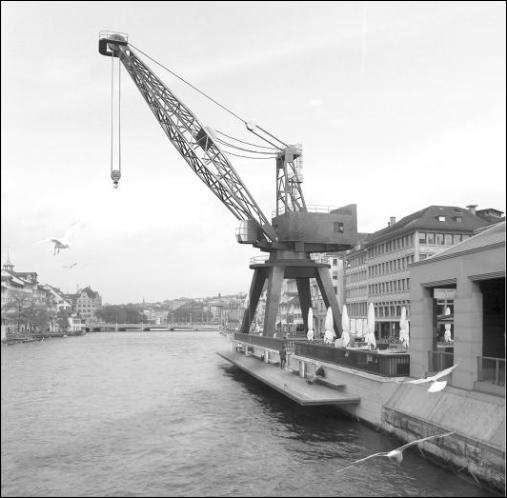
Schade. Einen Hafenkran an der Limmat gleich unterhalb des Lindehofs möchte sie dagegen gerne installieren.

Hafenkran Limmat

Tagi: "Die Frage ist, ob wir gestaltete Plätze oder trostlose Flächen wollen"

Dann doch lieber ein nettes Sit-In, Aktionskunst sozusagen, für eine Gute Sache, um ein bisschen auf extreme Verwerfungen in unserem Finanzsystem hinzuweisen!

Also, jeder kann ein bisschen mitspielen, man muss nicht im Zelt überwintern - heutzutage reicht ein kleines Web Formular:-).

Hier ist die Online Petition, damit könnt ihr die Stadt Zürich über eure Meinung informieren.

Friday, September 16, 2011

Biggest Brokest Banks

Biggest banks by assets for the business year of 2010 in CHF billion:


Broken banks according to the market as of the close of 2011-09-15 by percentage of market capitalization in relation to their assets (aeh, basically liabilities;-):


Data source: Thomson Reuters Datastream

Thursday, September 15, 2011

Soros on Europe

From Zero Hedge: Soros Thinks The Unthinkable About Europe
All this would cost money. Under existing arrangements no more money is to be found and no new arrangements are allowed by the German Constitutional Court decision without the authorization of the Bundestag.

[Any solution] would presuppose a radical change of heart, particularly in Germany. The German public still thinks that it has a choice about whether to support the euro or to abandon it. That is a mistake. The euro exists and the assets and liabilities of the financial system are so intermingled on the basis of a common currency that a breakdown of the euro would cause a meltdown beyond the capacity of the authorities to contain. The longer it takes for the German public to realize this, the heavier the price they and the rest of the world will have to pay.
With a comment from jeff montanye:
sacrifice democracy and freedom because disentangling euro based accounting is too complex? aww, go on, give it a try. and remember: the bondholders, stockholders and current management are the first to make a sacrifice, not the last. see how far that gets you.
2011-08-17

Der Spiegel Interview with George Soros
SPIEGEL: Is the current crisis even worse than the one in 2008?

Soros: This crisis is still the continuation of the same crisis. In 2008, the financial system collapsed and it had to be put on artificial life support. The authorities managed to save the system. But the imbalances that caused the crisis have not been removed.

...

Soros: Of course, speculation will always make a crisis worse. If there is a weak point, it will expose it. And you are right, the CDS market is a very dangerous instrument and I think it should not be allowed. I am one of the very few people who argue that the CDS is a dangerous instrument because it is so lop-sided in favor of a negative outcome.

...

Soros: The indebtedness of the US is not all that high, but if a double-dip recession was in doubt a few weeks ago, it is less in doubt now, because financial markets have a very safe way of predicting the future. They cause it. And the markets have decided that America is going to see a recession, particularly after the recent downgrade of the US by the rating agency Standard & Poor’s.

SPIEGEL: President Barack Obama has been fiercely criticized for his handling of the economy. You were one of his biggest supporters in 2008. Are you happy with his economic policy?

Soros: No, of course not. But the reality is that we have had 25 years of excesses building up in America — a combustible mix of too much credit and too much leverage. You need a long time to reverse that.

...

SPIEGEL: The $800 billion stimulus program launched by Obama did not live up to that?

Soros: Obama’s stimulus program was not big enough and it was not directed at improving infrastructure nor human capital. So it was not productive enough.

SPIEGEL: And any further stimulus is now basically a non-starter, because the conservative majority in Congress is hell-bent on preventing it.

Soros: That is what is pushing the world towards another recession, into a double dip.

...

SPIEGEL: As an investor, do you listen to the rating agencies?

Soros: Well, I do not, but many other investors do.

...

SPIEGEL: In the end, will China be the only winner in this crisis?

Soros: China, of course, has been the great winner of globalization, and if globalization collapses, the Chinese will also be among the losers. So they have a strong interest in preserving the current global system. However, in some ways, they have been just as reluctant to accept it as the Germans. Germans have been hesitant to accept responsibility for Europe, and the Chinese have been hesitant to accept responsibility for the world. But they are both being pushed into it.

Sunday, May 16, 2010

Financial Fraud System

Some years ago when starting to work at a bank, I was wondering what could be the maximum amount possible to steal from a bank. After a certain threshold, a whole army would come after them, wouldn't they? Of course, unless everything gets stolen, then the thiefs are the one with the army anyway?! And that's how it turned out. The whole western capitalistic system has been subverted. And as every banker has become a bankster, it is even impossible to pinpoint any individuals. Coup d'etat. Let's see what will follow. Europe has just capitulated too. Yes, why rob a bank when you can work for one (Mr. Dougan)?! And BTW, as the final name of this crisis is still out, my pick would be "Accounting Crisis". But then, maybe just a matter of time to attach the word Catastrophe onto it.

James K. Galbraith via Jesse's Cafe Americain: The US Intelligentsia and Middle Class Are In the Firm Grip of Fear, Fraud and Denial
Thus the study of financial fraud received little attention. Practically no research institutes exist; collaboration between economists and criminologists is rare; in the leading departments there are few specialists and very few students. Economists have soft-pedaled the role of fraud in every crisis they examined, including the Savings & Loan debacle, the Russian transition, the Asian meltdown and the dot.com bubble. They continue to do so now. ...

There are exceptions. A famous 1993 article entitled "Looting: Bankruptcy for Profit," by George Akerlof and Paul Romer, drew exceptionally on the experience of regulators who understood fraud. The criminologist-economist William K. Black of the University of Missouri-Kansas City is our leading systematic analyst of the relationship between financial crime and financial crisis. Black points out that accounting fraud is a sure thing when you can control the institution engaging in it: "the best way to rob a bank is to own one." The experience of the Savings and Loan crisis was of businesses taken over for the explicit purpose of stripping them, of bleeding them dry. This was established in court: there were over one thousand felony convictions in the wake of that debacle. Other useful chronicles of modern financial fraud include James Stewart's Den of Thieves on the Boesky-Milken era and Kurt Eichenwald's Conspiracy of Fools, on the Enron scandal. Yet a large gap between this history and formal analysis remains.

...

The complexity of the mortgage finance sector before the crisis highlights another characteristic marker of fraud. In the system that developed, the original mortgage documents lay buried – where they remain – in the records of the loan originators, many of them since defunct or taken over. Those records, if examined, would reveal the extent of missing documentation, of abusive practices, and of fraud. So far, we have only very limited evidence on this, notably a 2007 Fitch Ratings study of a very small sample of highly-rated RMBS, which found "fraud, abuse or missing documentation in virtually every file."

...

Latter-day financial economics is blind to all of this. It necessarily treats stocks, bonds, options, derivatives and so forth as securities whose properties can be accepted largely at face value, and quantified in terms of return and risk. That quantification permits the calculation of price, using standard formulae. But everything in the formulae depends on the instruments being as they are represented to be. For if they are not, then what formula could possibly apply?

An older strand of institutional economics understood that a security is a contract in law. It can only be as good as the legal system that stands behind it. Some fraud is inevitable, but in a functioning system it must be rare. It must be considered – and rightly – a minor problem. If fraud – or even the perception of fraud – comes to dominate the system, then there is no foundation for a market in the securities. They become trash. And more deeply, so do the institutions responsible for creating, rating and selling them. Including, so long as it fails to respond with appropriate force, the legal system itself.

Control frauds always fail in the end. But the failure of the firm does not mean the fraud fails: the perpetrators often walk away rich. At some point, this requires subverting, suborning or defeating the law. This is where crime and politics intersect. At its heart, therefore, the financial crisis was a breakdown in the rule of law in America.

Ask yourselves: is it possible for mortgage originators, ratings agencies, underwriters, insurers and supervising agencies NOT to have known that the system of housing finance had become infested with fraud? Every statistical indicator of fraudulent practice – growth and profitability – suggests otherwise. Every examination of the record so far suggests otherwise. The very language in use: "liars' loans," "ninja loans," "neutron loans," and "toxic waste," tells you that people knew. I have also heard the expression, "IBG,YBG;" the meaning of that bit of code was: "I'll be gone, you'll be gone."

...

But you have to act. The true alternative is a failure extending over time from the economic to the political system. Just as too few predicted the financial crisis, it may be that too few are today speaking frankly about where a failure to deal with the aftermath may lead.

In this situation, let me suggest, the country faces an existential threat. Either the legal system must do its work. Or the market system cannot be restored. There must be a thorough, transparent, effective, radical cleaning of the financial sector and also of those public officials who failed the public trust. The financiers must be made to feel, in their bones, the power of the law. And the public, which lives by the law, must see very clearly and unambiguously that this is the case.

Saturday, May 08, 2010

Off-Shore Centers

Here are some off-shore assets under management numbers from the Swiss Bilanz magazin:
Location        AUM (CHF bia)
Luxemburg 3'916
Cayman Island/Caribic 3'200
Switzerland 2'655
London 1'426
Singapore 1'222
Jersey 420

Wednesday, March 17, 2010

No Joke

Jon Stewart: In Dodd We Trust

Viao naked capitalism.